
The Real Cost of Ignoring Hairline Cracks in Buildings
Understanding Hairline Cracks
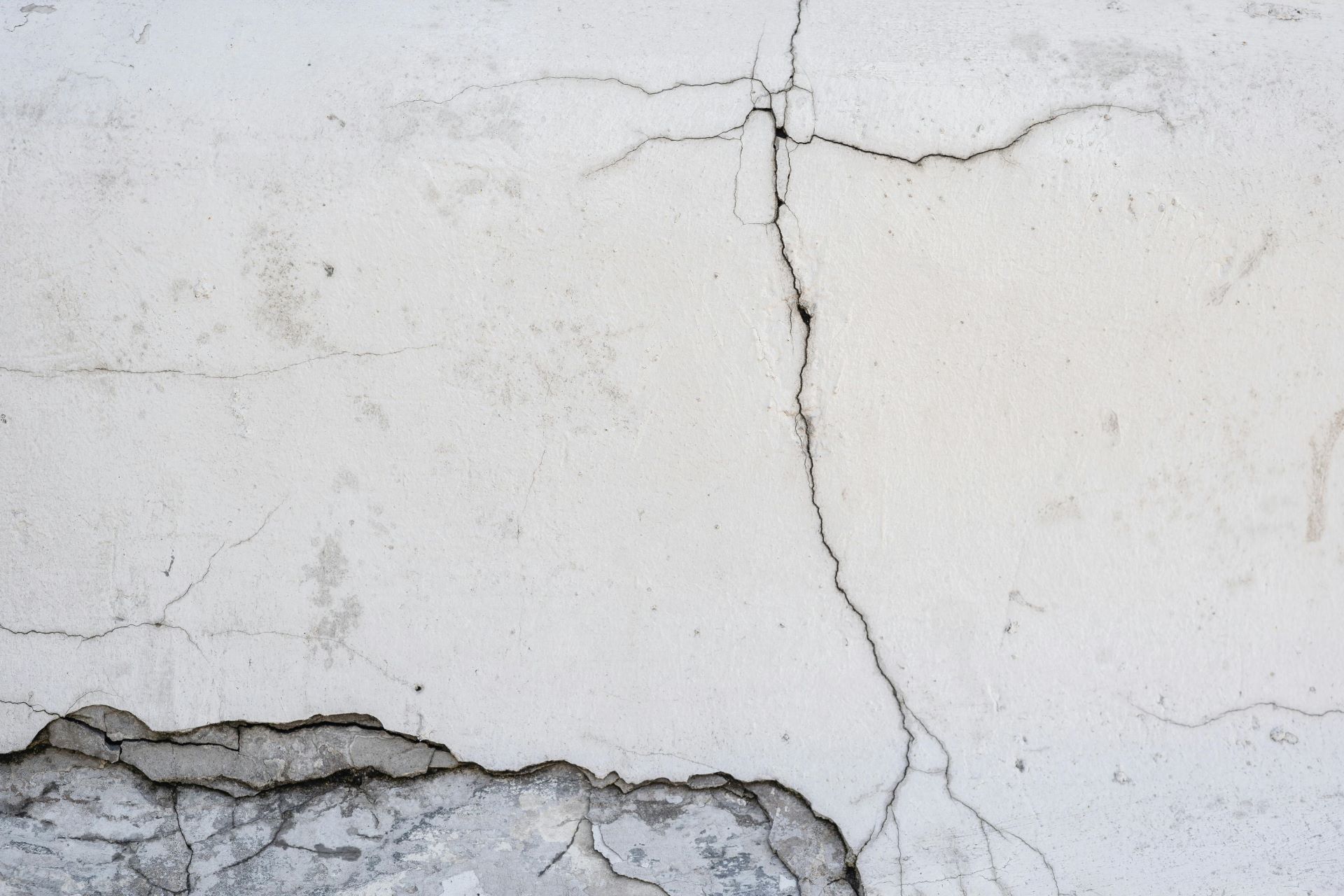
Hairline cracks are the quiet whisper of a building under stress. Thin, often barely visible lines that appear on plaster, paint, concrete, or masonry surfaces, they are frequently dismissed as cosmetic imperfections. In many cases, property owners assume they are part of normal settling, something to be patched and forgotten.
But buildings are not static objects. They are systems of interconnected materials that expand, contract, absorb load, respond to temperature shifts, moisture changes, and ground movement. Hairline cracks are often the earliest visible expression of that ongoing interaction.
While some cracks are superficial and harmless, others are the first stage of a deeper structural story unfolding beneath the surface. The challenge lies in knowing the difference.
A hairline crack is not a diagnosis on its own. It is a symptom. And like all symptoms, its meaning depends on context, progression, and pattern.
What Causes Hairline Cracks in Buildings
To understand hairline cracks, one must understand the forces acting on a building every day. Materials such as concrete, brick, and plaster are strong under compression but vulnerable to tension and movement. When those forces exceed what the material can comfortably absorb, cracking occurs.
One of the most common causes is natural settlement. As a building’s foundation adjusts to the soil beneath it, minor shifts occur. In the early life of a structure, this is expected. The ground compresses under load, moisture levels change, and the building finds its equilibrium.
Thermal expansion also plays a significant role. Materials expand in heat and contract in cold conditions. Over time, this constant cycle of movement creates stress points, particularly around corners, window frames, and junctions between different materials.
Moisture variation introduces another layer of complexity. In regions where rainfall patterns fluctuate or where plumbing leaks go unnoticed, materials can swell and shrink unevenly. This movement often manifests as fine cracking along plastered surfaces.
Poor workmanship or inadequate curing of materials during construction can accelerate the formation of cracks. If plaster dries too quickly or concrete is not properly cured, internal stresses remain locked within the structure, later revealing themselves as surface fractures.
Even vibration from nearby traffic, construction activity, or heavy machinery can contribute to micro-movements in a building’s structure. Over time, these small disturbances accumulate into visible hairline cracks.
What makes these cracks particularly important is not their initial appearance, but what they may indicate about the system beneath them.
Structural Movement Progression Over Time
A building is never truly still. It is in a constant state of micro-adjustment. The key question is whether that movement is stable or progressive.
Hairline cracks often begin as a single thin line. At this stage, they may be purely cosmetic, reflecting surface tension in plaster or paint. However, when structural movement is ongoing, these cracks begin to evolve.
The first stage is initiation. A small fracture appears, often less than a millimetre wide. At this point, it may be caused by shrinkage in materials or minor settlement. Many cracks never progress beyond this stage.
The second stage is propagation. The crack begins to lengthen or spread into adjacent areas. It may follow predictable paths, such as along mortar joints or around structural openings. This is where attention becomes critical, as propagation often indicates active movement within the structure.
The third stage is widening. A crack that was once hairline begins to open slightly. This can be subtle, sometimes only visible under certain lighting conditions or when touched. Widening suggests that the forces causing the movement are still active.
The final stage involves structural integration. At this point, cracks may begin to affect multiple building elements simultaneously. What was once a surface issue may now be linked to foundation movement, load redistribution, or material failure.
This progression does not always occur quickly. In many cases, it unfolds over years. This slow nature is what makes hairline cracks so dangerous from a maintenance perspective. They are easy to ignore precisely because they evolve quietly.
Early Warning Signs That Should Not Be Ignored
Not all hairline cracks are equal. Some remain stable for decades, while others are early indicators of deeper issues. The challenge lies in identifying patterns rather than isolated occurrences.
One of the most important indicators is direction. Vertical cracks may suggest settlement, while diagonal cracks often point to differential movement within the structure. Horizontal cracks, particularly in load-bearing walls, may indicate more serious stress conditions.
Another key factor is location. Cracks near doors, windows, and structural corners often suggest stress concentration points. These areas naturally experience higher loads and movement, making them sensitive indicators of structural behaviour.
Changes in door or window alignment can also accompany crack formation. If frames begin to stick, gaps appear, or fittings feel misaligned, it may suggest that movement is affecting the structural geometry of the building.
Repetition is another warning sign. Multiple cracks appearing in similar patterns across different areas of a building often indicate systemic movement rather than isolated surface issues.
Surface changes such as flaking paint, bulging plaster, or damp patches can further reinforce the likelihood that cracks are connected to underlying issues rather than cosmetic defects.
It is rarely a single crack that tells the full story. It is the combination of patterns, positions, and progression that reveals the true condition of the structure.
The Hidden Financial Cost of Ignoring Cracks
The most significant danger of hairline cracks is not immediate structural failure, but delayed maintenance. Small issues left unattended tend to compound over time, leading to significantly higher repair costs.
When cracks are ignored, moisture can penetrate deeper into building materials. This accelerates deterioration of plaster, brickwork, and even reinforcement steel in concrete structures. Once corrosion begins, repair complexity increases dramatically.
What starts as a simple surface patch can escalate into extensive replastering, waterproofing, or structural reinforcement work. In severe cases, entire sections of walling may require rebuilding.
There is also an indirect cost associated with energy efficiency. Cracks can compromise insulation integrity, allowing heat transfer and air leakage. This increases heating and cooling demands, which translates into higher utility expenses over time.
Property value is another affected area. Visible cracking, especially when widespread or poorly repaired, can negatively impact buyer perception. Even if the structural risk is low, the visual impression of instability can reduce market appeal.
Insurance implications may also arise in more serious cases. If cracks are linked to structural movement that was not addressed in a timely manner, claims can become more complex or disputed.
The financial reality is simple. Early intervention is almost always more cost-effective than delayed repair. Hairline cracks sit at the very beginning of that cost curve.
When Hairline Cracks Become Structural Concerns
The transition from cosmetic issue to structural concern is not always obvious. However, there are clear indicators that suggest escalation.
One of the most important is continued movement. If a crack is observed to grow over time, it suggests active forces are still at work. This may be due to foundation settlement, soil instability, or ongoing load redistribution.
Cracks that reappear after repair are another red flag. This often indicates that the underlying cause was not addressed, only the symptom.
In some cases, cracks may be accompanied by visible displacement. This includes sections of wall that no longer align properly, uneven flooring, or sloping surfaces. These signs suggest that movement is affecting the structural geometry of the building itself.
Water ingress through cracks also raises concern. Moisture entering structural elements can accelerate deterioration and weaken load-bearing capacity over time.
At this stage, professional assessment becomes essential. Structural engineers and qualified inspectors can determine whether movement is within acceptable tolerances or indicative of deeper instability.
The key distinction is between static and dynamic cracking. Static cracks are stable and unchanged over time. Dynamic cracks continue to evolve. It is the latter that demands attention.
Inspection and Monitoring Practices
Effective crack management begins with observation. Not every crack requires immediate repair, but every crack should be documented and understood.
One of the simplest monitoring methods involves visual tracking over time. Marking crack endpoints lightly and photographing them periodically allows for comparison. Even small changes in length or width can provide valuable insight into structural behaviour.
Environmental conditions should also be considered during observation. Seasonal changes can influence crack appearance, particularly in materials sensitive to moisture or temperature fluctuations.
Professional inspections often include measurement tools such as crack gauges or digital monitoring devices. These allow for precise tracking of movement over time, offering a clearer picture of whether progression is occurring.
It is also important to assess surrounding conditions. Drainage issues, soil movement, nearby construction activity, and vegetation growth can all influence structural stability.
In many cases, cracks are not isolated problems but symptoms of broader environmental or design-related factors. Understanding context is essential to making informed maintenance decisions.
Repair Approaches and Material Considerations
Repairing hairline cracks is not simply a matter of filling gaps. The method used depends entirely on the cause and severity of the crack.
For stable, non-structural cracks, flexible fillers or sealants are often sufficient. These materials accommodate minor movement and prevent moisture ingress while maintaining surface integrity.
In plastered surfaces, reapplication of skim coats may be used to restore uniform appearance. However, this approach is only effective when underlying movement has stabilised.
For cracks associated with structural movement, more advanced interventions may be required. This can include reinforcement techniques, joint repairs, or in some cases, foundation stabilisation measures.
Material compatibility is also critical. Using rigid fillers on actively moving cracks can lead to recurrence, as the repair material fails under continued stress.
Waterproofing treatments may be applied where moisture ingress is a concern, particularly in external walls exposed to weather conditions.
The most important principle in crack repair is addressing cause before symptom. Without understanding why the crack formed, any repair remains temporary at best.
Prevention and Long-Term Maintenance Strategy
Preventing hairline cracks is not always possible, but their severity and progression can often be managed through proactive maintenance.
Good drainage design is one of the most effective preventative measures. Water accumulation around foundations is a major contributor to structural movement, and proper runoff management reduces long-term risk.
Consistent maintenance of gutters, downpipes, and external waterproofing systems helps protect structural integrity by controlling moisture exposure.
Material selection during construction also plays a role. Proper curing of concrete, use of expansion joints, and appropriate plastering techniques all reduce internal stress accumulation.
Regular building inspections provide early detection opportunities. Identifying small issues before they evolve into larger structural concerns is central to effective maintenance strategy.
Vegetation management is another often overlooked factor. Tree roots can influence soil stability, while excessive moisture uptake or retention can affect foundation conditions.
Ultimately, prevention is about control of variables. While a building will always experience movement, that movement can be managed and mitigated through informed design and maintenance practices.
Hairline cracks are often dismissed because they appear harmless. Yet they exist at the intersection of surface aesthetics and structural behaviour, quietly reflecting the ongoing movement within a building.
Ignoring them does not stop the movement. It simply allows time for that movement to develop into more significant issues. The real cost is not in the crack itself, but in what it may become if left unmonitored.
A building communicates through subtle signs. Hairline cracks are among its earliest signals. Understanding them is not about alarm, but awareness. And in construction and maintenance, awareness is often the difference between a minor repair and a major reconstruction.