
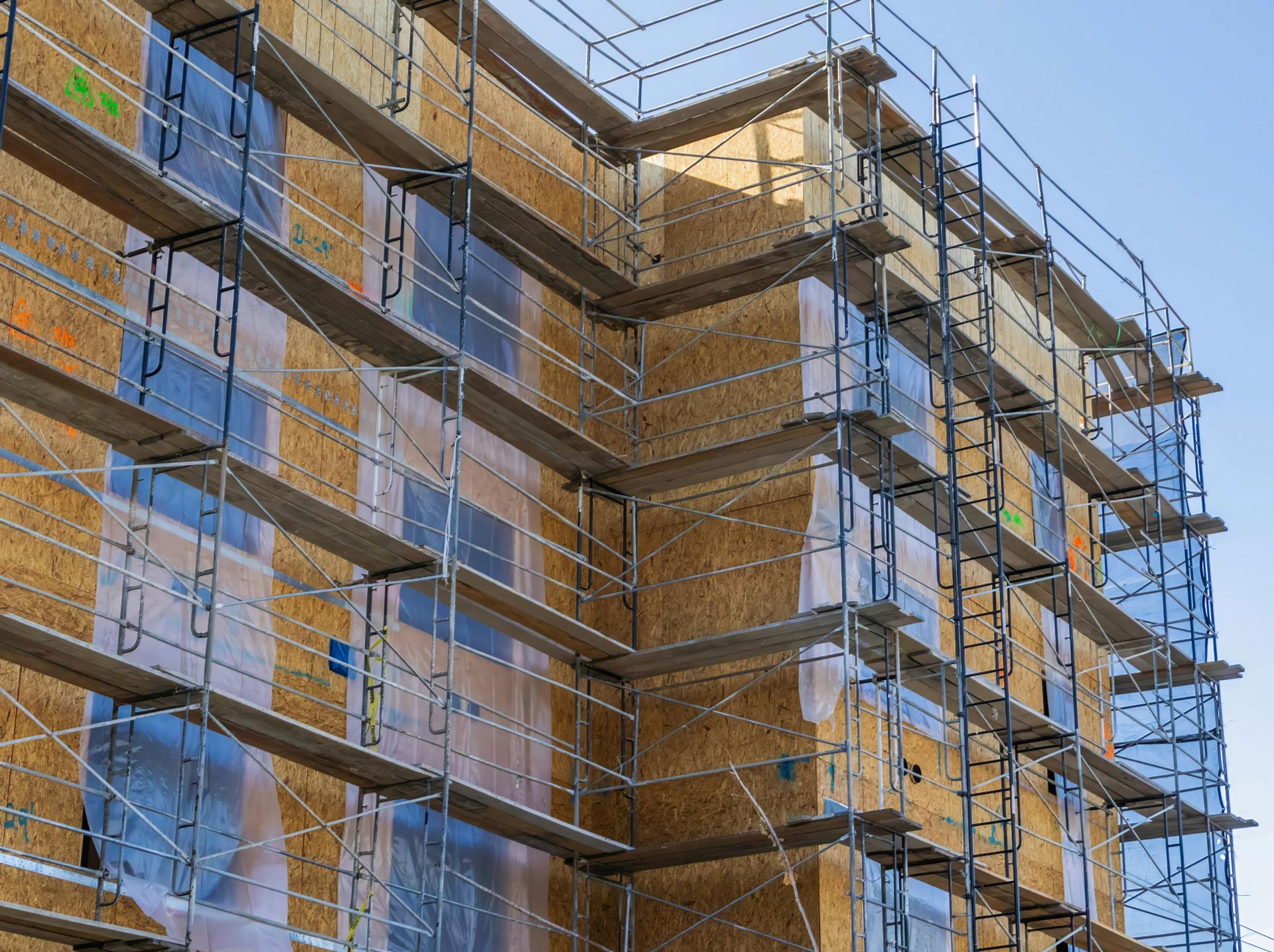
Structural Repair Techniques in Remedial Works
The Engineering Reality Behind Structural Repair
In South Africa’s built environment, structural deterioration is not a rare exception but an expected consequence of time, exposure, and load demand. From coastal corrosion along the Western Cape to thermal stress and subsidence challenges in Gauteng, buildings inevitably require remedial intervention to maintain safety and serviceability.
Structural repair techniques sit at the intersection of diagnosis and engineering response. They are not cosmetic fixes, but carefully engineered systems designed to restore load paths, re-establish material continuity, and extend service life.
Remedial construction, particularly in commercial and industrial assets, is increasingly driven by lifecycle economics. In many cases, strengthening an existing structure is far more cost-effective than demolition and reconstruction. This has placed structural rehabilitation at the forefront of modern building maintenance strategies in South Africa.
Understanding Structural Failure in South African Buildings
Before any repair methodology is selected, the nature of structural distress must be understood. Failure rarely occurs in isolation; it is typically the result of interacting mechanisms.
In South African conditions, the most common contributors include reinforcement corrosion in coastal zones, alkali-silica reaction in poorly controlled concrete mixes, differential settlement in variable soil profiles, and overloading due to change-of-use in commercial buildings.
Cracking, spalling, and deflection are often visible symptoms, but they rarely represent the root cause. As reinforced concrete ages, ingress of moisture, chlorides, and carbon dioxide initiates corrosion of embedded steel, which then expands and disrupts the surrounding concrete matrix. This progressive deterioration can compromise load-bearing capacity if not addressed early.
A proper remedial approach therefore begins with structural diagnosis, often involving non-destructive testing, cover surveys, and load path analysis. Without this diagnostic foundation, repair efforts risk treating symptoms rather than causes.
Engineering Assessment and Condition Mapping
Structural repair begins long before any physical intervention. The assessment phase defines the scope, urgency, and strategy of repair.
Engineers typically conduct visual inspections supported by hammer sounding, rebound testing, and core sampling. These methods help determine compressive strength, delamination zones, and reinforcement condition. In more advanced projects, ground-penetrating radar and corrosion potential mapping may be used to locate hidden defects.
The outcome of this stage is a condition map that categorises structural elements into levels of distress. Light cracking may require sealing or injection, while severe section loss may demand partial or full replacement.
In South African remedial practice, this phase is particularly important in older reinforced concrete buildings constructed before modern durability standards were consistently applied. Many of these structures require selective strengthening rather than wholesale replacement.
Concrete Removal and Selective Demolition Techniques
Once damaged areas are identified, controlled removal of deteriorated material is undertaken. This process is critical, as improper demolition can exacerbate structural weakness.
Selective demolition typically involves breaking out loose or contaminated concrete while preserving sound substrate and reinforcement. Hydraulic breakers, handheld percussion tools, and low-vibration splitting methods are commonly used depending on sensitivity requirements.
In structural columns and beams, removal is often staged to maintain temporary stability. Shoring systems are installed before any significant section loss is created. This ensures that load transfer remains uninterrupted during the repair process.
The objective is precision rather than volume. Only compromised material is removed, exposing reinforcement steel for inspection and treatment. Over-removal can introduce unnecessary cost and reduce structural efficiency, while under-removal leaves active deterioration in place.
Reinforcement Rehabilitation and Steel Restoration
Reinforcement steel is the backbone of reinforced concrete systems, and its rehabilitation is a critical step in structural repair.
Once exposed, steel reinforcement is assessed for corrosion, section loss, and bond integrity. Light corrosion can often be treated through mechanical cleaning and passivation coatings. Heavily damaged bars may require partial replacement or supplementary reinforcement.
In many South African coastal structures, chloride-induced corrosion is a recurring issue. This necessitates aggressive cleaning protocols, often followed by application of corrosion inhibitors or epoxy coatings to prevent recurrence.
Where section loss is significant, additional reinforcement bars are mechanically anchored into existing concrete using epoxy resins or drilled anchorage systems. This process restores tensile capacity and re-establishes structural continuity.
The success of this stage depends heavily on surface preparation. Poor cleaning or inadequate bonding preparation can result in premature failure of the repair system, regardless of material quality.
Crack Injection and Void Filling Methods
Cracking is one of the most common manifestations of structural distress, and not all cracks indicate structural failure. However, when cracks penetrate load-bearing elements or allow moisture ingress, they must be addressed through engineered repair.
Epoxy injection is commonly used to restore structural continuity in load-bearing cracks. The resin is pressure-injected into the crack network, bonding the fractured concrete back into a monolithic system. This method is particularly effective in beams and slabs where tensile continuity is critical.
Polyurethane injection is used where water ingress is active. Unlike epoxy, polyurethane expands upon contact with moisture, sealing leaks and preventing further penetration.
Void filling through cementitious grouting is used in cases where internal cavities exist due to poor compaction or long-term deterioration. These voids compromise load distribution and must be stabilised to restore structural integrity.
These injection techniques are highly dependent on crack diagnosis. Misclassification of active versus dormant cracks can lead to inappropriate material selection and reduced repair lifespan.
Sectional Repair and Recasting of Structural Elements
When deterioration exceeds repairable limits within a localized area, partial or full replacement of structural sections becomes necessary.
Partial-depth repair involves removing damaged concrete to a defined depth, preparing the substrate, and reinstating the section using high-strength repair mortars or micro-concrete. This is commonly used in slab edges, beam soffits, and column surfaces.
Full-depth replacement is reserved for severe cases where structural continuity is compromised throughout the element thickness. Temporary shoring is essential during this process to transfer loads away from the affected section.
In South African construction environments, sectional repair is often preferred over full replacement due to access constraints in urban buildings and the need to maintain operational continuity in commercial properties.
The interface between old and new concrete is a critical zone. Proper bonding agents and surface roughening techniques are used to ensure composite action between existing and new materials.
Structural Strengthening Using External Systems
Beyond repair, many remedial projects require strengthening to accommodate increased loads or updated building usage.
External reinforcement systems, including steel plate bonding and fibre-reinforced polymer (FRP) wrapping, are widely used in modern rehabilitation projects. These systems enhance flexural, shear, and axial capacity without significantly increasing structural weight.
FRP systems are particularly valuable in South Africa’s retrofit market, where older buildings are adapted for new commercial or industrial functions. Carbon fibre wraps can be applied to beams and columns to increase load capacity and improve ductility.
Steel jacketing is another common technique, involving the encasement of existing columns in additional steel or concrete layers. This method increases both strength and stiffness while improving seismic and impact resistance.
Strengthening is not a universal solution but a targeted intervention. It requires detailed structural analysis to ensure that new load paths are properly integrated with existing systems.
Foundation Stabilisation and Underpinning Techniques
Structural distress is often rooted in foundation movement rather than superstructure failure. In such cases, remedial construction shifts focus to ground stabilisation and load transfer.
Underpinning is a primary technique used to deepen or reinforce foundation support. This may involve extending existing footings to more stable soil strata or installing deep support elements such as piles or piers.
Helical and push pier systems are widely used in cases of settlement. These systems transfer structural loads through unstable soil layers to competent bearing strata below.
In South Africa, expansive clay soils and variable fill conditions in urban developments often necessitate foundation stabilisation during refurbishment projects. Without addressing foundation movement, surface-level structural repairs are unlikely to succeed long-term.
Proper sequencing is essential, as foundation intervention can introduce additional stress into the existing structure if not carefully controlled.
Corrosion Protection and Durability Enhancement
Once structural integrity is restored, long-term durability must be addressed to prevent recurrence of deterioration.
Surface protection systems, including sealers, coatings, and waterproof membranes, are applied to reduce moisture ingress. These systems are particularly important in coastal and high-humidity environments.
Cathodic protection systems may also be installed in high-risk structures, particularly bridges and industrial facilities. These systems reduce corrosion potential by controlling electrochemical activity in reinforcement steel.
Protective strategies are increasingly integrated into remedial construction rather than treated as optional add-ons. Without durability enhancement, even well-executed repairs may degrade prematurely under South African environmental conditions.
Quality Control and Long-Term Performance Monitoring
Structural repair does not conclude at material placement. Quality control and monitoring are essential to ensure that interventions perform as intended.
Inspection regimes typically include adhesion testing, compressive strength verification, and visual assessment during curing. In critical infrastructure, long-term monitoring systems may be installed to track movement, cracking, or moisture ingress.
Remedial construction in South Africa increasingly adopts lifecycle thinking. This includes maintenance planning, scheduled inspections, and adaptive repair strategies that respond to changing structural conditions over time.
The goal is not only to restore structural capacity but to ensure that capacity is maintained under real-world conditions.
The Discipline of Structural Renewal
Structural repair techniques in remedial construction represent a highly specialised branch of engineering intervention. They combine material science, structural analysis, and construction methodology to restore and extend the life of built assets.
In South Africa’s diverse environmental and geological conditions, these techniques are not optional maintenance tools but essential components of infrastructure sustainability.
From reinforcement rehabilitation to foundation stabilisation and advanced strengthening systems, each method serves a specific role in preserving structural integrity. When applied correctly, they transform deteriorating structures into safe, functional, and durable assets once again.
The true value of remedial construction lies not in the visibility of the repair, but in the reliability of the structure long after the intervention has been completed.