
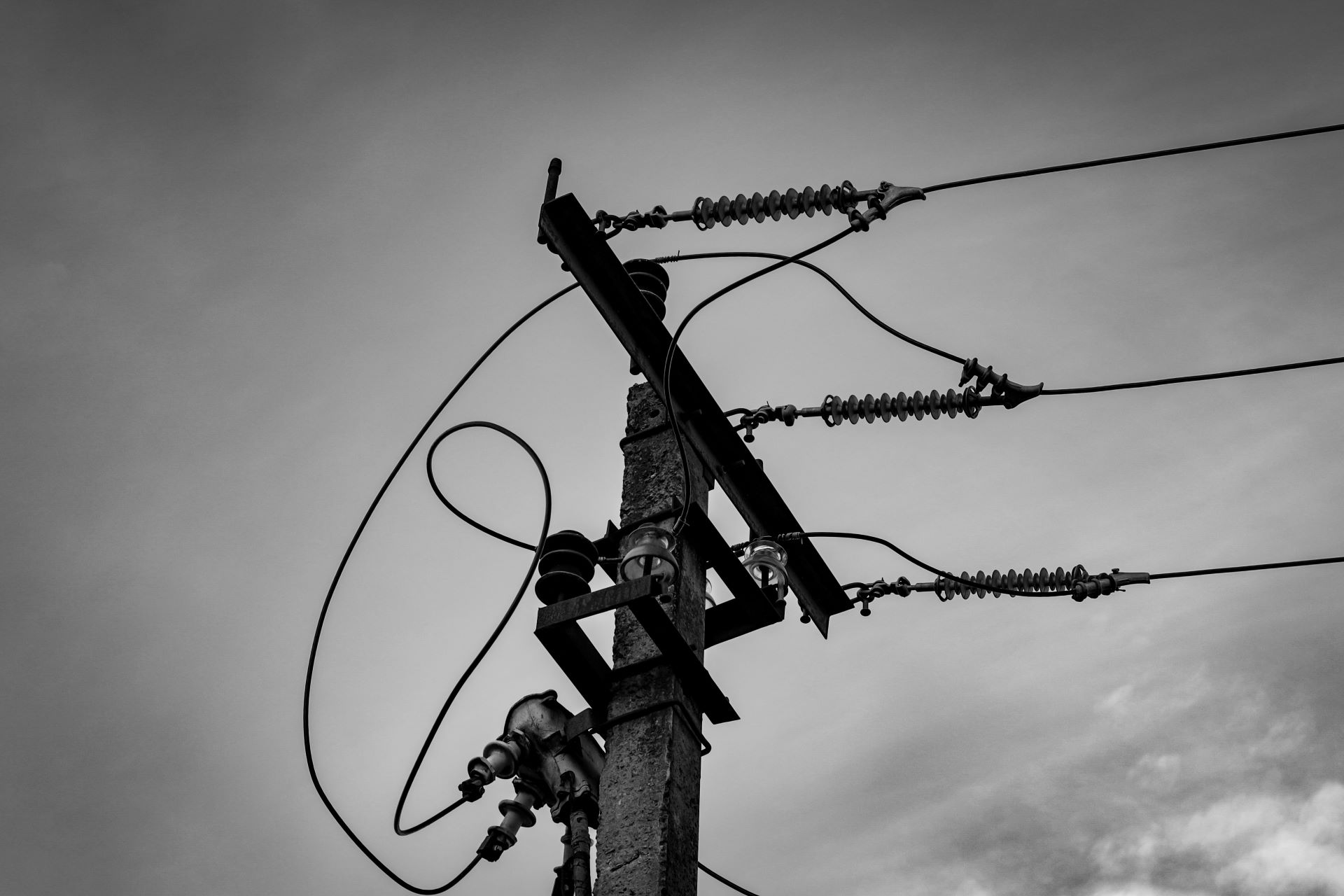
Power Outages: Grid Fault or Building Issue?
Power Outages: When It’s the Grid vs When It’s Your Building
Power doesn’t just “go out.” It decides to leave for very different reasons, depending on whether the problem sits miles away in the electrical grid or quietly inside the building’s own wiring ecosystem.
For building maintenance teams, this distinction is not academic. It determines whether you call the utility company, roll out a generator inspection, or open up an internal fault investigation that could involve switchboards, distribution boards, or automatic transfer switches.
The challenge is that both scenarios look identical at first glance. The lights go off. Tenants panic. Elevators stop mid-floor. But underneath that shared symptom lies a critical question: is the building being abandoned by the grid, or is it failing to receive power it should already be getting?
This article breaks down how to diagnose responsibility in power outages, with a focus on generator systems, internal electrical faults, and grid-side failures in construction and building maintenance environments.
Understanding the Two Sides of an Outage
Every building sits at the intersection of two electrical worlds.
On one side is the external supply: the municipal grid, substations, feeders, and transmission lines that deliver electricity to your property boundary. Large-scale disturbances in this system can cause widespread outages, sometimes cascading across entire regions when demand exceeds generation or faults propagate through connected networks.
On the other side is the internal system: the building’s own electrical infrastructure. This includes main incomers, switchgear, distribution boards, wiring, protection devices, and backup systems like standby generators and automatic transfer switches (ATS).
A standby generator is designed to bridge external failure by taking over when grid power disappears, automatically restoring supply to essential loads through an ATS system.
When something goes wrong, the confusion often comes from overlap. A grid outage should trigger generator operation. A building fault might prevent that from happening. And a generator fault can mimic a grid failure entirely.
Understanding which layer failed is the first step toward restoring control.
The First Diagnostic Clue: What the Building Is Doing
When power drops, the building itself becomes your first diagnostic instrument.
If the entire site goes dark and the generator does not start, the issue could still be either upstream (no signal or no utility power) or internal (generator failure, controller fault, or ATS malfunction).
If the generator starts but loads remain dead, the problem shifts toward internal distribution or transfer switching.
If some areas stay powered while others die, you are likely dealing with a partial internal fault, such as a tripped breaker, phase loss, or distribution board failure.
These patterns matter more than any single reading on a multimeter because they reveal system behaviour, not just symptoms.
A useful mental model is this: the grid feeds the building, but the building decides how electricity is distributed once it arrives. When that decision-making layer breaks, the symptoms can look exactly like a grid collapse.
Grid Failure Patterns: When the Problem Is Not Yours
Grid-related outages tend to have a certain “personality.”
They are usually sudden, widespread, and externally confirmed. Neighbouring properties go dark at the same time. Streetlights may fail. Mobile networks can become unstable in severe cases. The failure is rarely isolated to a single building unless the building sits at the end of a vulnerable feeder line.
At the system level, grid failures are often caused by faults that trigger protective devices, forcing sections of the network offline to prevent cascading damage.
From a building maintenance perspective, the key indicator is simultaneity. If the outage affects multiple unrelated properties, the probability of a grid issue rises sharply.
In these cases, generators should respond automatically. If they do not, the issue may not be supply-related at all, but rather a failure in the building’s emergency power logic.
Internal Electrical Faults: The Quiet Saboteurs
Internal faults are more deceptive because they often imitate grid instability.
These faults can include:
• Tripped circuit breakers in main distribution boards
• Phase imbalance or phase loss
• Faulty contactors or switchgear
• Overloaded circuits causing protective shutdowns
• Wiring degradation or insulation failure
Unlike grid failures, internal faults are usually localised. One wing of a building may go dark while another remains active. Elevators might fail while lighting continues to function. Server rooms may stay online if separately protected.
Electrical faults in power systems are broadly defined as abnormal current conditions caused by defects such as short circuits, open circuits, or ground faults.
The key diagnostic difference is selectivity. Internal faults rarely behave uniformly. They isolate themselves through protective devices, creating uneven outage patterns across the building.
The Generator: Hero, Witness, or Suspect?
The standby generator sits at the centre of most diagnostic confusion.
In a correctly designed system, it detects loss of grid power and starts within seconds, transferring load through an ATS to maintain continuity.
But when something goes wrong, the generator can mislead the entire investigation.
If the generator starts but fails to carry load, the issue may be:
• ATS failure or stuck contacts
• Output breaker trip
• Fuel or load capacity mismatch
• Voltage regulation faults
If the generator does not start at all, the problem may be control-related rather than electrical supply-related.
If it starts late or inconsistently, you may be dealing with control logic delays, battery issues, or sensing failures.
This is why generators are often wrongly blamed for grid failures, or vice versa. They sit in the middle of the story, reacting to both external and internal conditions.
ATS Systems: The Hidden Decision Point
The automatic transfer switch is the quiet gatekeeper of building power.
It decides whether electricity flows from the grid or the generator. When it fails, everything downstream behaves as though power itself has disappeared.
A stuck ATS in “grid mode” can prevent generator power from ever reaching the building. A failed sensing circuit can prevent the generator from starting. A welded contact can lock a system into the wrong power source entirely.
From a diagnostic perspective, ATS behaviour is often the most important clue in separating grid issues from building faults.
If grid power is restored but the building remains on generator, the ATS is suspect. If grid power disappears but the generator never engages, again the ATS or its control logic becomes a prime candidate.
The Phase Problem: Why Partial Power Is a Big Clue
In three-phase buildings, partial outages are especially informative.
If lifts are dead but lights still work, or if one floor is affected while others are not, the issue is likely internal phase loss or imbalance rather than a full grid outage.
Phase loss can occur due to:
• Blown fuses in one phase
• Loose incomer connections
• Faulty contactors
• Distribution board failure
These conditions are dangerous because they can overload remaining phases, leading to cascading internal damage if not corrected quickly.
Grid outages, by contrast, rarely present as selective internal behaviour unless there is a broader upstream phase failure affecting multiple customers simultaneously.
Generator vs Grid: The Behaviour Matrix
A practical way to think about responsibility is behavioural comparison.
Grid failures are external, simultaneous, and widely reported. Internal faults are local, uneven, and often progressive. Generator faults sit in between, either failing to respond or responding incorrectly.
When diagnosing, technicians often ask three questions:
• Did the outage affect other buildings?
• Did the generator attempt to start?
• Did any part of the building remain powered?
The answers usually point clearly toward one of the three systems: grid, generator, or internal distribution.
When Multiple Systems Fail at Once
The most difficult scenarios occur when more than one layer fails simultaneously.
A grid outage might trigger a generator that then fails to start due to battery issues. Or an internal fault might coincide with a scheduled generator maintenance issue, creating a false impression of grid instability.
In large commercial buildings, these overlapping failures are not rare. Complex electrical ecosystems mean one failure can mask another.
This is why maintenance logs, alarm histories, and system tests are critical. Without them, diagnosis becomes guesswork.
Maintenance Insight: Preventing Diagnostic Chaos
Good maintenance does not just prevent outages. It makes outages readable.
When systems are properly tested, each component leaves a “signature.” The grid failure looks like a clean handover. The generator failure produces a specific alarm trail. Internal faults trigger predictable breaker or relay responses.
Regular testing of ATS operation, generator load handling, and distribution board integrity reduces ambiguity during real-world failures.
In practice, the goal is not just uptime, but clarity. When something goes wrong, you want the system to tell you exactly where it hurt.
The Final Diagnostic Mindset
Power outage diagnosis is less about finding blame and more about locating responsibility.
The grid provides energy but does not manage your building. The building distributes energy but does not create it. The generator bridges the gap but only when properly integrated.
When outages occur, the fastest resolution comes from understanding which layer stopped behaving as expected.
Once that is clear, everything else becomes mechanical: fix the fault, restore the flow, and bring the system back into alignment.
Because in building maintenance, electricity does not just fail. It changes ownership. And your job is to find out exactly where that ownership shifted.