
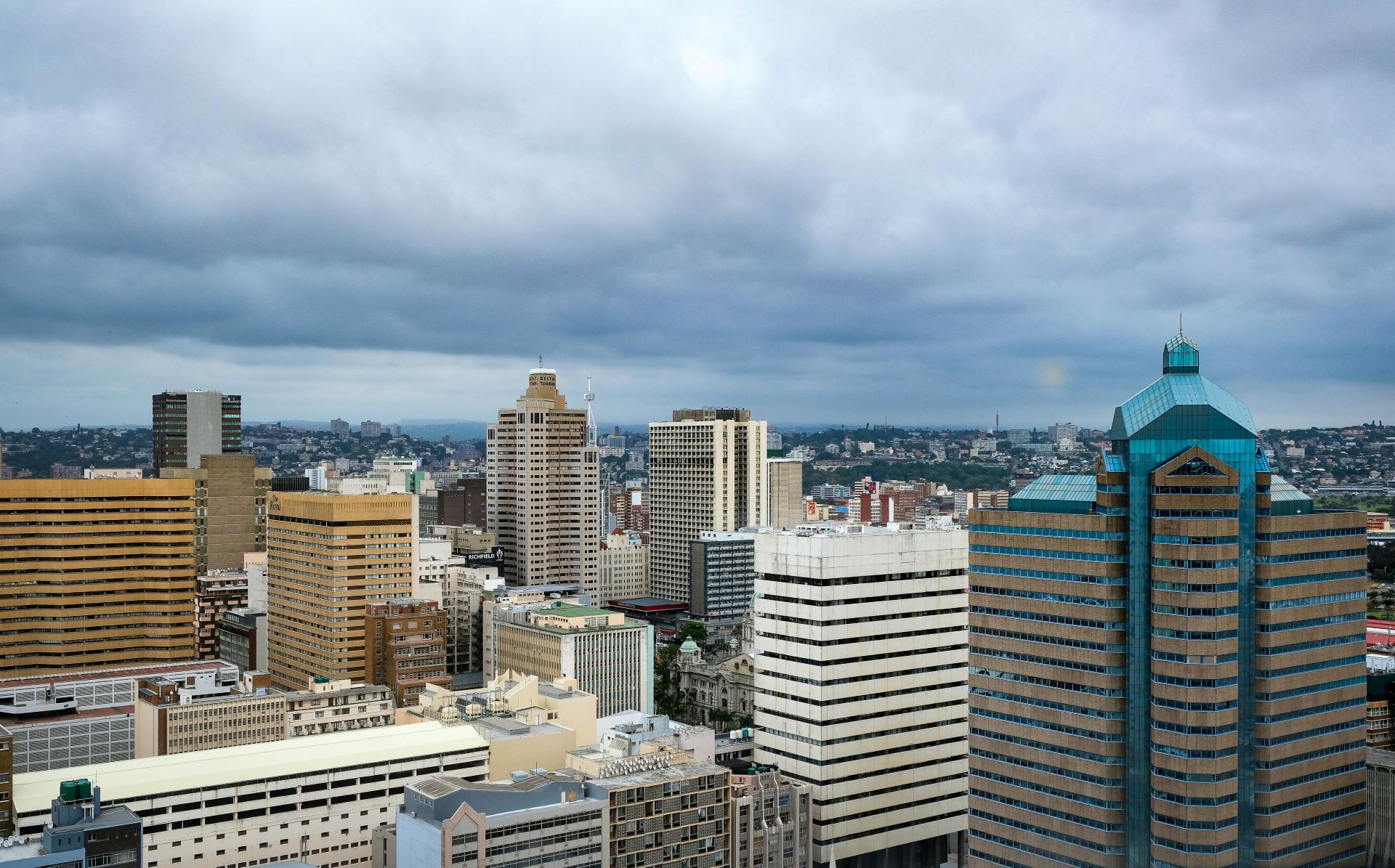
Climate Change and South African Building Stress Today
A Shifting Climate, A Shifting Built Environment
South Africa’s buildings were not designed for the climate they are now living in.
Over the past two decades, the country has experienced a noticeable intensification of weather extremes. Longer heatwaves in Gauteng. More aggressive storm cells over KwaZulu-Natal. Stronger coastal wind systems in the Western Cape. Even inland regions once considered climatically stable are beginning to show signs of volatility.
For the construction and building maintenance sectors, this is not an abstract environmental debate. It is a slow, steady recalibration of what “normal” means for structures, materials, and design expectations.
Buildings are no longer static objects sitting in predictable conditions. They are becoming dynamic systems exposed to increasing thermal, moisture, and mechanical stress.
The result is a subtle but persistent transformation in how South African buildings age.
Heat as a Structural Stressor, Not Just a Comfort Issue
Heat is often discussed in terms of human comfort, but in construction terms, it is a material force.
In many parts of South Africa, especially inland urban centres like Johannesburg, Pretoria, and parts of Limpopo and the North West, surface temperatures on building materials are rising significantly during summer peaks. Roof sheeting, façade cladding, and concrete surfaces expand and contract more frequently and more intensely than in previous decades.
This thermal cycling leads to gradual fatigue. Fasteners loosen. Sealants degrade faster. Paint systems blister and lose adhesion earlier than expected.
Concrete, while robust, is not immune. Repeated thermal expansion can contribute to micro-cracking, especially where mix design, curing, or reinforcement cover is suboptimal. Over time, these micro-pathways allow moisture ingress, accelerating reinforcement corrosion.
In practical terms, buildings are ageing faster, not because they are poorly built, but because the baseline environmental assumptions have changed.
Passive cooling design is becoming less of an architectural luxury and more of a structural necessity. Wider roof overhangs, reflective coatings, and improved insulation are now essential responses rather than optional upgrades.
Storm Intensity and the New Reality of Water Ingress
South Africa’s storm patterns are becoming less predictable and more intense in short bursts. Instead of prolonged rainfall, many regions now experience concentrated downpours that overwhelm traditional drainage assumptions.
KwaZulu-Natal’s coastal belt has been particularly exposed. The flooding events of recent years revealed how quickly water can exploit weak points in urban infrastructure and residential construction. Roof systems that were previously considered adequate began to fail under sudden hydrostatic pressure and wind-driven rain.
Water ingress is one of the most expensive and destructive forms of building damage because it rarely stays localised. Once moisture enters a structure, it migrates.
It travels along beams, seeps into insulation layers, and accumulates in cavities where it accelerates decay. Ceiling systems collapse not because of a single failure, but because of prolonged hidden saturation.
Drainage design is now under renewed scrutiny. Gutters, downpipes, stormwater channels, and site grading must all account for higher peak loads rather than historical averages.
Even waterproofing membranes, once expected to perform reliably for years with minimal intervention, are being re-evaluated under more aggressive exposure cycles.
Coastal Buildings and the Slow Violence of Salt and Humidity
South Africa’s extensive coastline introduces another layer of climate-driven stress: salt-laden air combined with rising humidity levels.
In cities such as Durban, Cape Town, and Port Elizabeth (Gqeberha), corrosion is no longer a gradual background process. It is an active maintenance concern.
Steel reinforcement in concrete structures is particularly vulnerable when chloride ions penetrate protective layers. Once corrosion begins, it expands within the concrete matrix, creating internal pressure that leads to spalling.
This is not sudden failure. It is slow structural erosion.
Metal roofing systems, balustrades, and façade fixtures also experience accelerated oxidation. Even protective coatings degrade faster under the combined influence of UV radiation, salt spray, and moisture cycling.
Maintenance strategies in coastal zones are shifting from reactive to preventive. More frequent inspections, upgraded coating systems, and corrosion-resistant materials such as stainless steel or treated aluminium are becoming standard practice in new developments.
Material Fatigue and the Hidden Cost of Repetition
Climate change does not only introduce new extremes. It also increases the frequency of existing stress cycles.
A building is essentially a collection of materials designed to endure repetition: daily heating and cooling, wet and dry cycles, load fluctuations, and wind pressure.
When these cycles intensify, fatigue accumulates faster than anticipated.
Sealants around windows begin to fail earlier. Expansion joints require more frequent replacement. Roofing screws loosen under repeated thermal movement. Even brickwork can develop stress fractures in extreme conditions.
In many South African buildings, especially mid-century residential stock, maintenance schedules were designed around stable environmental assumptions. Those assumptions are no longer valid.
The financial implication is subtle but significant. Maintenance budgets that once accounted for predictable degradation are now under pressure from accelerated wear patterns that are not always immediately visible.
Urban Heat Islands and the Rising Temperature of Cities
Cities in South Africa are becoming heat amplifiers.
Concrete, asphalt, and dense building clusters absorb heat during the day and release it slowly at night. This creates what is known as the urban heat island effect, where urban centres remain significantly warmer than surrounding rural areas.
Johannesburg, for example, is increasingly experiencing warmer nights during summer months. This reduces the natural cooling recovery period that buildings rely on.
Air conditioning systems compensate for this imbalance, but this introduces another layer of strain: increased energy demand, higher operational costs, and greater mechanical wear on HVAC systems.
From a construction perspective, urban heat islands are influencing material selection and urban design strategies. Lighter-coloured roofing materials, reflective coatings, and increased green infrastructure are being incorporated into new developments to mitigate heat absorption.
Passive shading strategies, once associated primarily with luxury architecture, are becoming mainstream requirements in sustainable design frameworks.
Foundations Under New Moisture Regimes
Soil behaviour is changing in response to shifting rainfall patterns.
In regions experiencing alternating drought and intense rainfall cycles, soil expansion and contraction becomes more pronounced. Clay-rich soils are especially vulnerable, swelling when wet and shrinking when dry.
This movement places stress on building foundations, leading to cracking in walls, uneven floors, and structural misalignment.
In parts of Gauteng and the Free State, where expansive soils are common, foundation design is being revisited with greater emphasis on soil stabilisation and deeper footing systems.
Moisture management around foundations is also gaining importance. Poor site drainage can no longer be treated as a minor oversight. It directly influences long-term structural integrity.
Roofing Systems as First-Line Climate Defences
Roofs are now the frontline defence against climate stress.
They are exposed to heat, wind, rain, hail, and UV radiation simultaneously. In many cases, roof failure is the first visible indicator of broader environmental strain on a building.
In South Africa, metal roofing remains common due to its durability and cost efficiency. However, under changing conditions, even these systems require adaptation.
Thermal expansion is increasing fastener fatigue. Hailstorms in Gauteng are causing more frequent denting and surface damage. UV exposure is degrading protective coatings faster than anticipated.
Tile roofing systems also face challenges, particularly in wind uplift zones where storm intensity has increased.
Modern roofing design is increasingly incorporating layered insulation systems, improved underlay membranes, and more robust fixing methods to withstand these evolving pressures.
Building Codes and the Slow Evolution of Standards
South African building regulations, including frameworks such as SANS 10400, provide baseline requirements for structural safety and performance.
However, climate change is testing the speed at which these standards evolve.
Many existing regulations were developed around historical climate data. As environmental conditions shift, there is growing pressure to update design assumptions related to wind loads, rainfall intensity, and thermal performance.
The challenge lies in balancing regulatory stability with adaptive responsiveness.
Construction professionals are increasingly supplementing code requirements with climate-resilient design principles, often drawing from international best practice in sustainable architecture and resilient infrastructure design.
Maintenance Culture as Climate Adaptation
One of the most overlooked aspects of climate adaptation is maintenance culture.
In the South African context, building maintenance is often reactive rather than preventative. Repairs are made after visible failure rather than in anticipation of environmental stress.
Climate change is forcing a shift in this mindset.
Preventative maintenance schedules are becoming more critical. Regular inspections of waterproofing systems, structural joints, roofing integrity, and drainage systems are no longer optional best practice. They are essential risk management tools.
Buildings that are actively maintained are significantly more resilient to climate stress than those that rely solely on initial construction quality.
Retrofitting the Existing Building Stock
New buildings can be designed for resilience. Existing buildings must be adapted.
Retrofitting is becoming one of the most important construction activities in South Africa’s urban environment.
This includes upgrading insulation systems, reinforcing waterproofing layers, improving ventilation, and replacing outdated materials with more climate-resistant alternatives.
Energy efficiency retrofits also play a dual role. They reduce operational costs while improving thermal comfort in increasingly hot conditions.
In many cases, retrofitting is not about transformation but about reinforcement. Strengthening what already exists to meet new environmental demands.
The Future Built Environment: Adaptive, Not Static
The most important shift in South African construction thinking is philosophical rather than technical.
Buildings are no longer being designed for a stable climate. They are being designed for variability.
This means embracing uncertainty as a design parameter. Structures must be capable of handling a wider range of environmental conditions without failure.
Flexibility, redundancy, and resilience are becoming core design principles.
Materials are being selected not only for strength but for adaptability. Systems are being designed for easier maintenance and replacement. Urban planning is increasingly integrating climate data as a dynamic input rather than a fixed reference.
Building in a Moving Climate
South African buildings are entering a new era of environmental negotiation.
Heat is more intense. Storms are more concentrated. Materials are under greater stress. And maintenance demands are increasing across the board.
Yet this is not a story of decline. It is a story of adaptation.
Construction is evolving in response to a shifting baseline, where the goal is no longer to resist change but to accommodate it intelligently.
The buildings that will endure are not necessarily the strongest in traditional terms, but the most adaptable. Those designed, maintained, and retrofitted with climate awareness embedded at every level.
In this way, South Africa’s built environment is quietly learning a new language: one written in heat, wind, and water, and translated through design, engineering, and care.